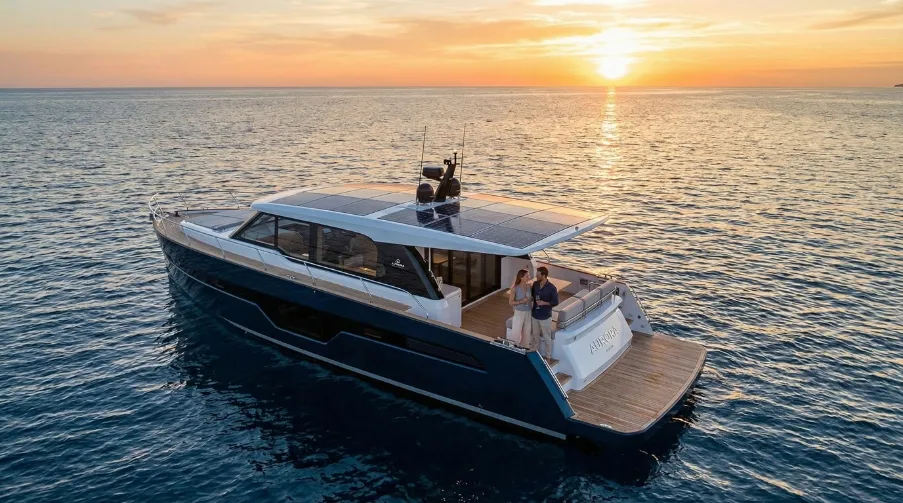
With growing environmental awareness and maturing solar technology, more and more boat owners are considering installing solar power systems for their yachts, sailboats, or powerboats. A well-designed marine solar system not only reduces dependence on traditional fossil fuels but also provides quiet, clean power, making your sea voyage more comfortable and sustainable.
Why Choose Solar Power for Your Yacht?
Solar power offers unique advantages in marine applications:
- Eco-friendly: Zero emissions, reducing pollution to the marine environment
- Silent operation: Unlike generators, no noise for peaceful anchor rest
- Low maintenance: Solar panels require almost no maintenance, lasting 25+ years
- Cost savings: One-time investment, long-term fuel cost reduction
- Off-grid independence: True off-grid power system, no dependency on port charging facilities
💡 Professional Recommendation
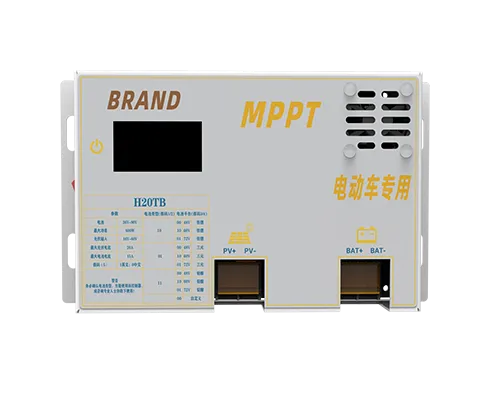
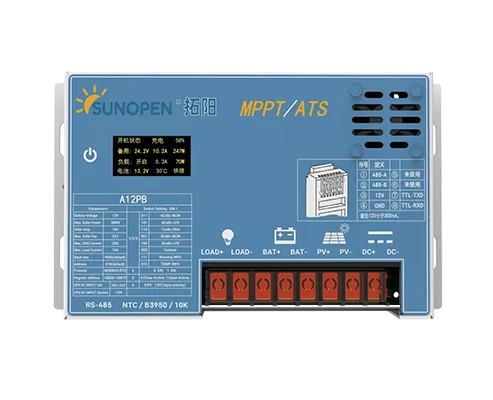
For marine applications, we recommend SUNOPEN's 800W Boost MPPT Controller, specifically designed for 48V/60V/72V marine battery systems, supporting high-power solar panel arrays with 99.9% tracking efficiency for maximum energy harvest.
Marine Solar System Components
1. Solar Panels
Marine-grade solar panels need these characteristics:
- Flexible and rigid options: Rigid panels for flat decks, flexible panels for curved surfaces
- High efficiency: Monocrystalline or polycrystalline, 18-22% efficiency
- Corrosion resistant: Special coating to resist seawater corrosion
- Lightweight: Minimize boat weight burden
2. MPPT Solar Controller
The MPPT controller is the core of the system. SUNOPEN recommends:
"In marine applications, due to boat rocking and constantly changing light angles, the tracking capability of MPPT controllers is particularly important. SUNOPEN's 99.9% tracking efficiency ensures maximum energy in any sailing condition."
3. Battery Bank
Common battery types for marine use:
- Lithium Iron Phosphate: Lightweight, safe, long life (2000+ cycles)
- Lead-acid: Low cost, but heavy with shorter lifespan
- AGM batteries: Maintenance-free, suitable for marine applications
System Design and Calculations
Designing a marine solar system requires considering these factors:
Step 1: Determine Daily Energy Consumption
List all electrical devices on board and their power:
- Refrigerator: 80W × 24h = 1920Wh
- Lighting: 20W × 6h = 120Wh
- Navigation equipment: 50W × 12h = 600Wh
- Water pump: 100W × 1h = 100Wh
- Daily total consumption: ~2740Wh
Step 2: Calculate Solar Panel Requirements
Assuming 4 hours of effective sunlight per day, solar panel power needed:
2740Wh ÷ 4h ÷ 0.7 (system efficiency) ≈ 1000W solar panels
Step 3: Choose Suitable MPPT Controller
For a 1000W system at 48V:
1000W ÷ 48V ≈ 21A → Recommended SUNOPEN 800W Boost MPPT or larger model
Installation Considerations
Safety First
- All electrical connections must be waterproof and corrosion-resistant, use Marine-grade terminals
- Install ground fault protection devices to ensure personnel safety
- Solar panel placement must consider overboard escape routes
- Battery compartments must have good ventilation
Optimize Installation
- Solar panel orientation and angle should maximize light reception
- Avoid shadow遮挡, even partial shading significantly reduces output
- Use shock-resistant mounts to reduce vibration during navigation
- Leave maintenance space for regular cleaning and inspection
Maintenance and Care
While solar systems require minimal maintenance, regular checks are needed:
- Monthly: Clean solar panel surface, check connections for looseness
- Quarterly: Check controller settings, test battery condition
- Annually: Comprehensive inspection of cable insulation, clean battery terminals
FAQ
Q: Can the solar system still generate power on cloudy days?
A: Yes, although efficiency is reduced, the solar system can still work. On cloudy days, power generation is typically 10-25% of sunny days. Having a sufficiently large solar panel array and battery reserves can compensate for this deficiency.
Q: Can I use both solar and shore power at the same time?
A: Absolutely. In fact, this is the ideal configuration—solar as the primary power source, shore power as backup and supplement.
Q: Do I need to stow solar panels while sailing?
A: For rigid panels, they are usually fixed installed on deck. Choosing UV-resistant and marine-environment-resistant materials is important. Flexible panels can be rolled up for storage when not needed.
Conclusion
Installing a solar power system for your yacht is a worthwhile investment. It not only saves you long-term energy costs but also provides a more environmentally friendly, quiet maritime experience. SUNOPEN's professional-grade MPPT controllers and 800W Boost MPPT are specifically designed for marine applications, ensuring your system operates efficiently in all sea conditions.
Contact SUNOPEN today to get a yacht-specific solar solution tailored for you.