In solar power systems, the MPPT (Maximum Power Point Tracking) controller plays a crucial role. It's like the "brain" of the solar system, responsible for optimizing the energy output of solar panels. So why does MPPT efficiency matter so much? Let's dive deep.
What is MPPT Efficiency?
MPPT efficiency refers to how accurately the controller tracks the maximum power point of solar panels. Solar panel output power fluctuates with changes in light intensity, temperature, and load conditions. MPPT algorithms monitor these changes in real-time, constantly adjusting the operating point to ensure panels always operate at maximum power point.
💡 Key Data
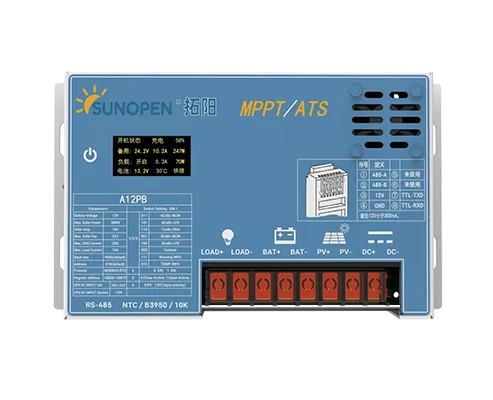
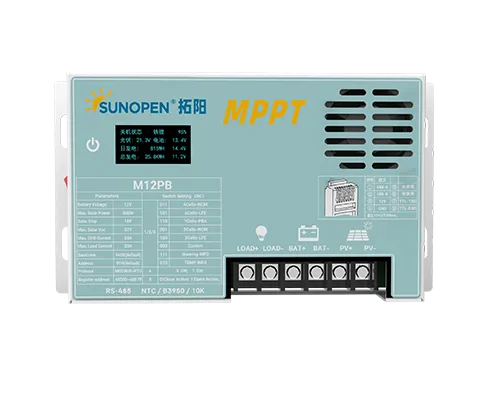
SUNOPEN's MPPT controllers achieve 99.9% tracking efficiency, meaning under ideal conditions, almost all available solar energy can be effectively harvested and utilized.
MPPT vs PWM: Efficiency Comparison
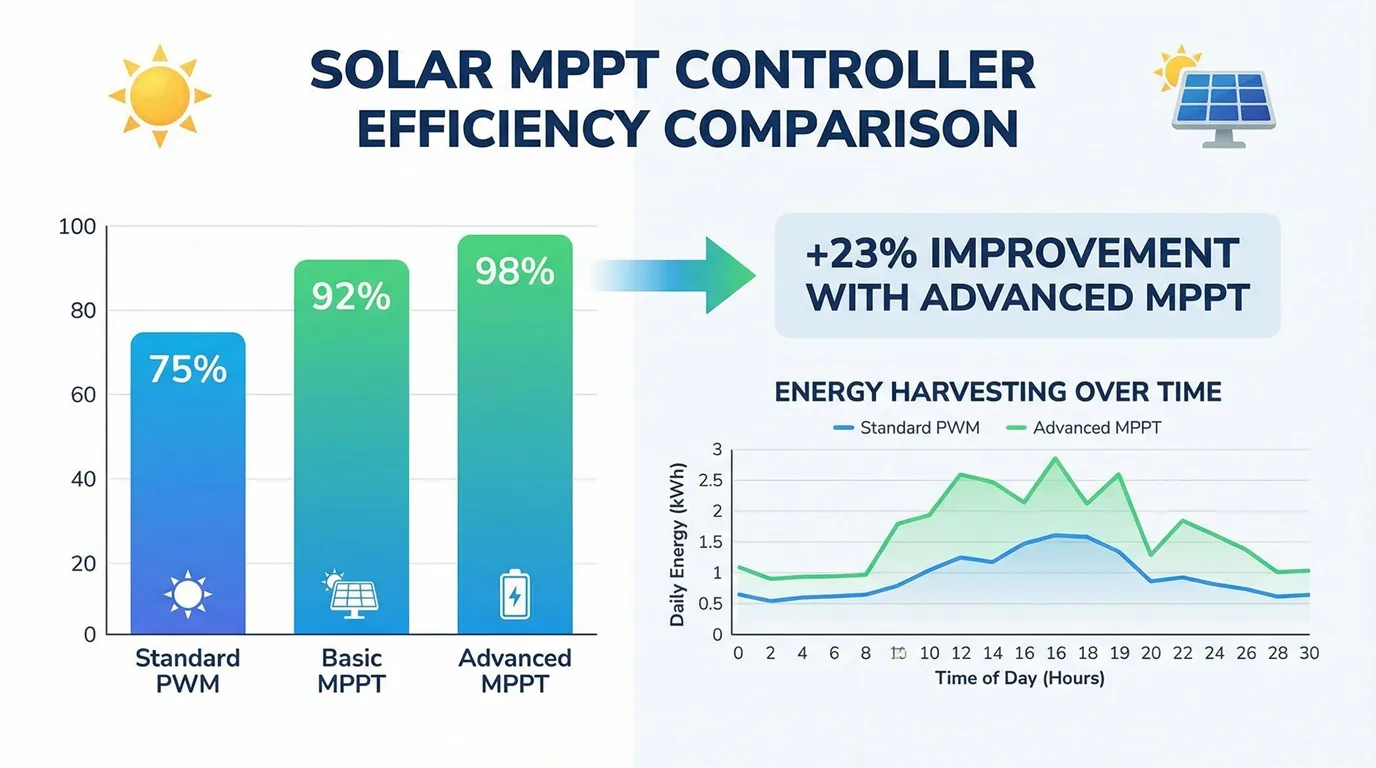
Traditional PWM (Pulse Width Modulation) controllers directly connect solar panels to batteries without optimizing power output. MPPT controllers use DC-DC conversion to extract maximum power from panels.
| Feature | PWM Controller | MPPT Controller |
|---|---|---|
| Tracking Efficiency | ~70-80% | 99.9% (SUNOPEN) |
| Energy Loss | 20-30% | Less than 1% |
| Application | Small simple systems | All solar systems |
| Cost Effectiveness | Low initial cost | Higher long-term returns |
Practical Benefits of High MPPT Efficiency
1. Significant Energy Harvest Improvement
In cloudy or low-light conditions, the advantages of MPPT controllers become even more apparent. Research shows that compared to PWM controllers, high-efficiency MPPT can improve energy harvest by 15-30%. This means your batteries charge faster and system runtime is longer.
2. Extended Battery Life
SUNOPEN's MPPT controllers use intelligent charging algorithms with multi-stage charging modes (bulk, absorption, float) that:
- Prevent overcharging, protecting both panels and batteries
- Optimize charging curves for different battery types
- Automatic temperature compensation for various environments
3. Reduced System Cost
Although MPPT controllers require slightly higher initial investment, their higher efficiency allows cost recovery in a shorter time. For a 100W system:
"Using SUNOPEN's 99.9% efficiency MPPT controller generates approximately 15-20% more electricity annually, with additional costs recovered within 3-4 years."
Key Factors Affecting MPPT Efficiency
1. Algorithm Precision
SUNOPEN uses an advanced hybrid algorithm combining Perturbation & Observation and Incremental Conductance methods, enabling fast and accurate maximum power point tracking even under rapidly changing light conditions.
2. Conversion Efficiency
The internal DC-DC converter efficiency directly impacts overall performance. SUNOPEN uses synchronous rectification technology with conversion efficiency up to 98%, minimizing energy loss.
3. Temperature Characteristics
High temperature is the enemy of electronic efficiency. SUNOPEN controllers use industrial-grade components and optimized thermal design to maintain stable high efficiency across a wide temperature range from -40°C to +85°C.
How to Choose a High-Efficiency MPPT Controller
When selecting an MPPT controller, pay attention to these key indicators:
- MPPT Tracking Efficiency: Choose products above 99%, like SUNOPEN's 99.9% series
- Conversion Efficiency: Not less than 95%, higher is better
- Operating Temperature Range: Wide range adapts to more applications
- Protection Features: Comprehensive protection against over-voltage, over-current, short circuit, reverse connection
- Smart Features: Remote monitoring, data logging, fault diagnosis, etc.
Conclusion
MPPT efficiency is the core metric for evaluating solar controller performance. Choosing SUNOPEN's 99.9% tracking efficiency MPPT controller maximizes your solar system returns, reduces energy costs, and contributes to sustainable development.
Contact SUNOPEN today to learn how our high-efficiency MPPT controllers can transform your solar system.