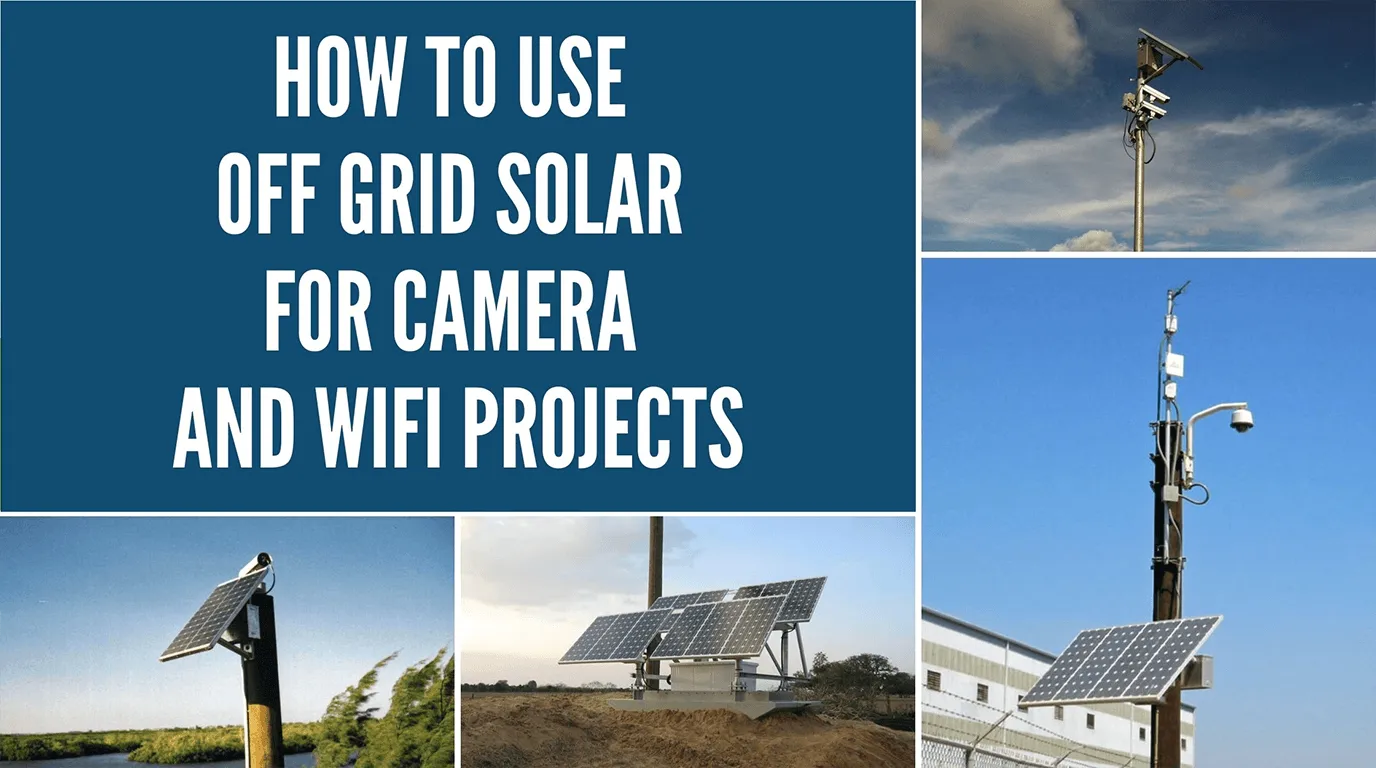
In modern society, security surveillance is everywhere. However, for remote areas, construction sites, farms, mines, and other locations without grid access, traditional power supply methods are often impractical. Solar-powered surveillance systems are the ideal solution for this challenge. This article provides a detailed introduction to solar surveillance system components, advantages, and how to select the right components.
Why Choose Solar-Powered Surveillance?
The advantages of solar surveillance systems make them the top choice for remote area monitoring:
📹 Unlimited Deployment Freedom
不受电网限制,可以在任何有阳光的地方安装监控设备。No grid limitations - install monitoring equipment anywhere with sunlight, from remote mines to vast farmland.
💰 Lower Long-Term Costs
One-time investment, no high grid connection fees or ongoing electricity costs, typically recovering costs within 2-3 years.
🌱 Environmentally Sustainable
Zero carbon emissions, clean energy supply, aligns with modern environmental values and corporate social responsibility.
🔒 High Reliability
With large-capacity batteries, systems can operate continuously for days during cloudy weather, ensuring uninterrupted surveillance.
💡 Application Scenarios
Solar-powered security cameras are widely used in: construction site monitoring, agricultural monitoring (farmland, greenhouses, farms), security surveillance (villas, warehouses, parking lots), environmental monitoring (rivers, forests, nature reserves), infrastructure monitoring (bridges, street lights, communication base stations), and more.
Solar Surveillance System Components
1. Solar Panels
Solar panels are the energy source for the system. Considerations when selecting:
- Power: Calculated based on camera power consumption and local sunlight conditions
- Type: Monocrystalline has the highest efficiency, suitable for space-limited scenarios
- Installation angle: Optimal tilt angle usually equals local latitude
- Protection rating: IP65 or above, resistant to rain, wind, and dust
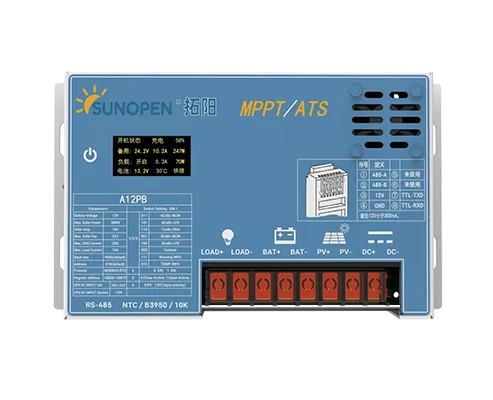
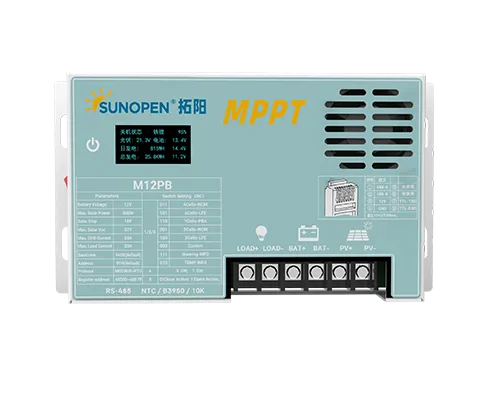
2. MPPT Solar Controller
The MPPT controller is the "brain" of the system, with its performance directly determining system efficiency and stability:
"SUNOPEN's Smart Mini DC Hybrid MPPT controller supports 12V/24V/48V systems with 99.9% tracking efficiency. It can automatically adapt to PV and DC dual inputs, ensuring maximum energy harvest under various lighting conditions."
3. Battery Bank
Batteries store excess solar energy during the day for use at night and during cloudy days:
- Lithium Iron Phosphate: Long life (2000+ cycles), high safety, lightweight
- Lead-acid batteries: Low cost, mature technology, but heavy with shorter lifespan
- Capacity selection: Usually designed for 3-5 consecutive cloudy days
4. Surveillance Camera
Choose the appropriate camera type based on requirements:
- Standard cameras: Daytime operation, requires infrared supplement at night
- 4G wireless cameras: Transmits data via 4G network, no wiring required
- PTZ cameras: Rotatable, zoomable, suitable for large-area monitoring
- Solar all-in-one cameras: Integrated solar panel, battery and camera, easy installation
System Design Essentials
Power Consumption Calculation
Example for a typical solar surveillance point:
- Camera power: 5W (24-hour operation)
- Daily consumption: 5W × 24h = 120Wh
- Plus controller loss (~10%): 120Wh ÷ 0.9 ≈ 134Wh
- If night vision infrared is needed: additional 50-100Wh
Solar Panel Configuration
Assuming 4 hours of effective sunlight per day, solar panel power needed:
134Wh ÷ 4h ÷ 0.7 (system efficiency) ≈ 50W solar panel
Considering cloudy day reserves, recommended to configure 100W or more solar panels.
Battery Capacity
To ensure 3 consecutive cloudy days of power supply:
134Wh × 3 days ÷ 0.8 (battery depth of discharge) ≈ 500Wh
For a 12V system, approximately 50Ah battery capacity is needed.
SUNOPEN Solutions
SUNOPEN provides professional MPPT controller solutions for solar surveillance applications:
Smart Mini DC Hybrid MPPT
- Supports 12V/24V/48V systems
- Supports 10A/20A current specifications
- 99.9% MPPT tracking efficiency
- PV + DC dual input, automatic switching
- Smart charging management, extends battery life
- Built-in Bluetooth, can monitor via mobile APP
Installation Considerations
- Safety first: All electrical connections must be waterproof and moisture-proof
- Theft prevention: Equipment enclosures should be locked, solar panels may need anti-theft design
- Regular maintenance: Clean solar panel surface every 3-6 months, check battery status
- Signal guarantee: For 4G cameras, ensure the installation location has good signal coverage
FAQ
Q: Will the system work during consecutive cloudy days?
A: It depends on battery capacity and solar panel configuration. Reasonably designed systems can support 3-7 days of consecutive cloudy weather. Customized design based on local climate conditions is recommended.
Q: What if winter has insufficient sunlight?
A: In winter, consider increasing solar panel power or battery capacity. Controllers should also have temperature compensation functions for correct charging in low-temperature environments.
Q: Can I monitor remotely?
A: Absolutely. With SUNOPEN's 4G/Bluetooth communication modules, you can view system status and surveillance footage in real-time through your mobile APP.
Conclusion
Solar-powered surveillance systems provide reliable monitoring solutions for remote areas and locations without grid access. By choosing SUNOPEN's professional-grade MPPT controllers and high-quality components, you can build an efficient, stable, long-running solar surveillance system.
Contact SUNOPEN today for solar surveillance solutions tailored to your specific application.